
Teen Wellbeing
Teen well-being is your physical, mental and emotional health. It is your ability to handle stress, build healthy relationships, and develop a positive self-image.
Mental health affects how you think, feel, act, and deal with stress. It’s not just about being “okay” or “not okay.” Mental health can change over time, depending on what’s happening in your life.
Physical health is about taking care of your body. You can do this through exercise, healthy eating, and getting about 7–9 hours of sleep each night. It also includes going to the doctor for check-ups to monitor your growth and health.
Social connections help you build safe and nurturing relationships with family, friends, and community members like teachers and mentors.
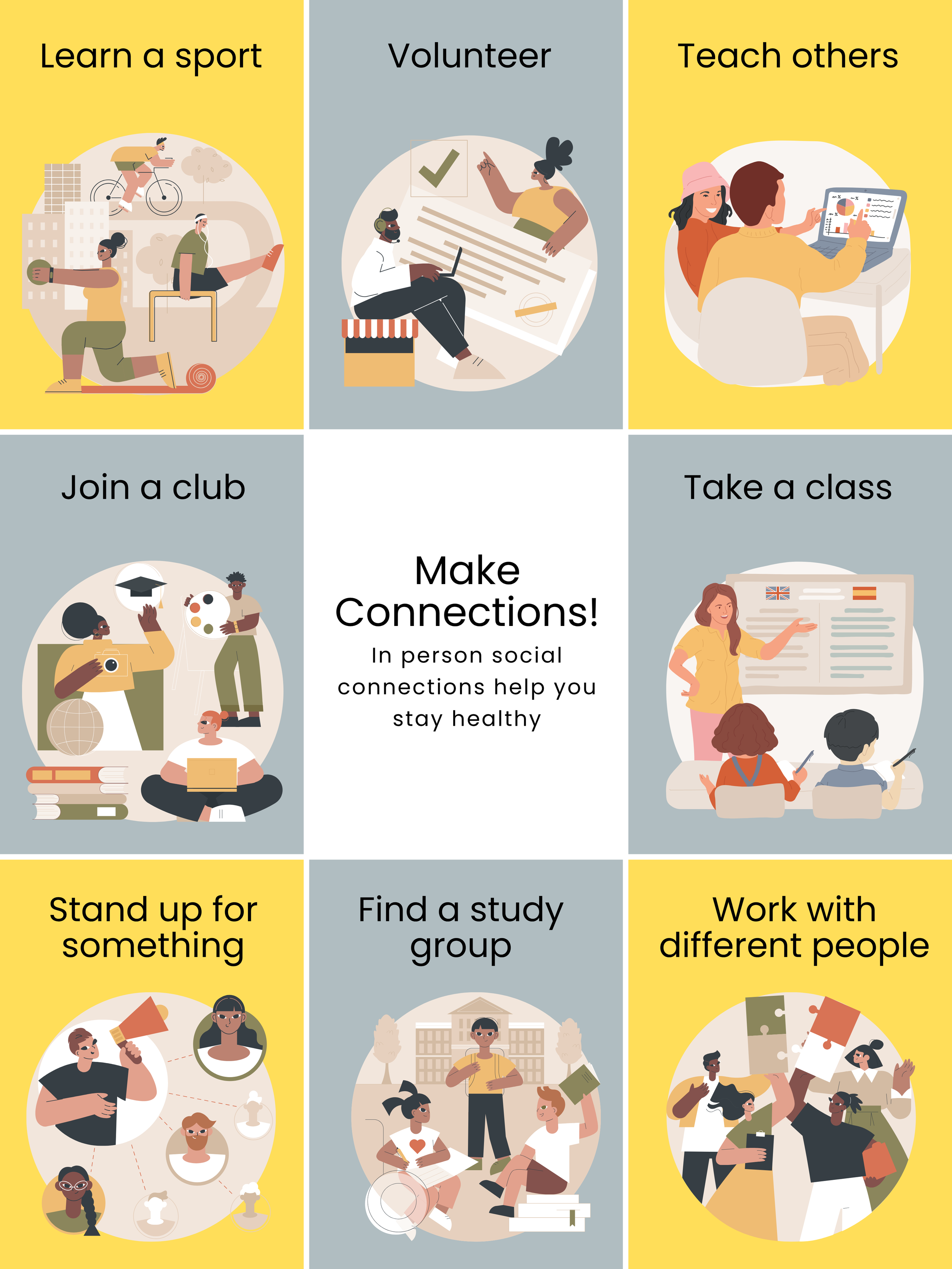
Think About it
Here are some healthy practices to improve your well-being:
Call a friend
Listen to music
Do arts and crafts
Play physical sports
Play games
Learn a dance
Walk outside and get fresh air
Go to the movies
Try roller skating
Drive go-karts
Go to the arcade
Learn a new skill
Write in a journal
Social hangouts with friends and family

Make it make sense
Dating and being in a relationship feels good when people treat each other with respect. Dating and being in relationships can also become abusive. It’s important to know the difference. Abuse can take many forms, including:
Physical abuse: Such as hitting.
Sexual abuse: Such as forcing someone to have sex.
Emotional abuse: Such as putting a person down or trying to control their actions.
Any abuse is wrong. There is no such thing as “deserving it” or “asking for it.” Both women and men can be victims of violent relationships.
Everyone deserves a healthy relationship.
Healthy relationships include:
Respecting each other.
Valuing your differences.
Encouraging each other to have interests and friends outside of the relationship.
Ensuring both people get their way and compromise some of the time.
Disagreements and arguments are a normal part of a relationship, and healthy conflict is okay. However, violence is NEVER okay. If your arguments turn hurtful or violent, your relationship might be abusive.
As teen, you’re going through a lot…
You’re learning who you are, dealing with friendships, handling school, and growing up. That’s why it’s important to know yourself and take care of yourself. Start by paying attention to how you feel.
Changes in your mood, energy, or behavior are signs that something is going on—they are not flaws. Instead of ignoring your feelings, try to understand them.
You can talk to someone you trust, express yourself through art or writing, or take a break from things that stress you out.
When you understand yourself better, you can express yourself and what is going on with you to other people. Just like you build relationships with other people, you can build a relationship with yourself too!
Learn what helps you feel better. This might mean being creative, or connecting with people who truly support you. You have the power to set boundaries, and build healthy ways to cope. This isn’t just about getting through your teen years—it’s about becoming strong and confident as you grow. This all helps you regulate your mind, body, and spirit.
